This website uses cookies to improve your experience while you navigate through the website. Out of these cookies, the cookies that are categorized as necessary are stored on your browser as they are essential for the working of basic functionalities of the website. We also use third-party cookies that help us analyze and understand how you use this website. These cookies will be stored in your browser only with your consent. You also have the option to opt-out of these cookies. But opting out of some of these cookies may have an effect on your browsing experience.

Returns Pallets UK Stock Buying Pros and Cons?
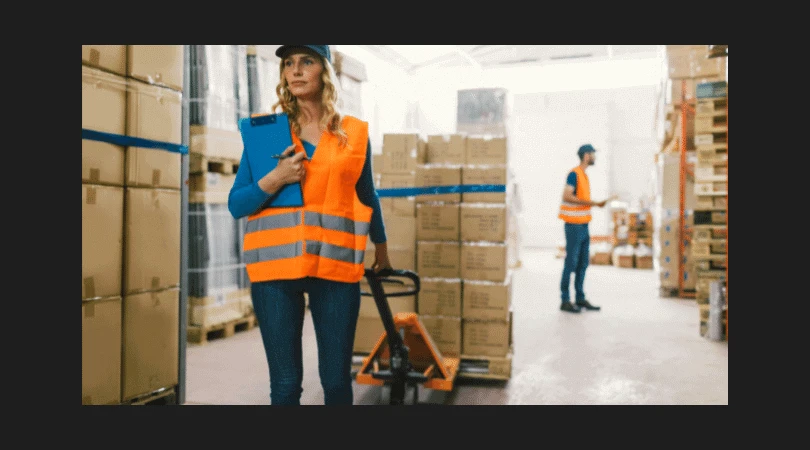
In this article, I aim to discuss the pros and cons of purchasing return pallets by evaluating key factors, including price, quality, risk, brand, quantity, and supplier.
What are returns pallets goods?
Returns goods are products being bought from retailers by the consumer and then returned to the store for various reasons, from dislike to wrong choice or a fault.

How are the customer returns goods resold?
They are bought, processed, and resold by contracted/registered suppliers or agents. The suppliers will sell them as is or grade and repack them for sale in the UK (B2B). If the stores place restrictions to protect their brand rights, they will export them to permissible countries overseas.
Sourcing wholesale clearance return pallets
When sourcing wholesale return pallets, there are usually two primary reasons behind choosing this option. Let's examine these two main reasons and then assess the overall pros and cons.
Why buy return pallets?
The first reason is price; UK customer returns stock pallets are sold at the lowest rate compared to an extensive range of wholesale clearance stocks.
The second main reason is the brands; ideally, the stocks should not only be a brand but more likely a reasonably famous brand or brands, so you can increase your chances of earning better profits.
How can I maximise profits selling returns pallets?
If you are looking to buy low-priced brand UK high street returns pallets, such as Primark returns and Argos returns, or supermarket chain brands, such as George at Asda returns or F&F at Tesco returns, you would be better off buying pallets to fill a truck trailer with a vast collection. This way, you will become skilled in handling both the good and the bad, just like your supplier does.
Pros
-
Very low wholesale price.
-
Famous brands.
-
Good quality - famous brands have a higher standard of quality.
-
Bigger customer audience to sell - brands have their own audience exposure, making it an easier sell for you.
-
A small budget allows for more stock purchases.

Cons
-
High risk - returned goods have a high rate of defects (slightly faulty- still maybe sellable) and damages (major faults - unsellable) this is classed as a high-risk status.
-
No clear visibility of perfect goods - although many suppliers produce nicely detailed packing lists - you will have non or little clarity of the condition of the stock. This can be quite misleading as on the list you might see a great wholesale brand product but when you receive the product it can be severely damaged.
Some suppliers grade the pallets for you. A-B-C grades A being the best. Another grading for electricals tested and non-tested. This helps to a certain degree but also the grading differs for each supplier and it can be overrated in value.
-
Unrealistic RRP's (recommended retail price) - this is a subject on its own to write a book about however, you probably have seen a lot of this RRP on packing lists and labels. It's a recommended price for retailers to sell (so estimated retail) which again can be quite misleading these days as most brand retailers offer up to 70% discounts on sales from those prices while the product is new and perfect.
-
Expenses can be costly - If you are buying return stock pallets from an auctioneer it is very likely that you can be paying add-on charges. Premiums can vary up to 20% of the sale plus you might be charged a small admin fee then you have your vat and delivery charge. Before you realize the total cost can increase up to 50%! Always ask your supplier and calculate your expenses to be safe.
-
Can be time-consuming and laborious - when you receive your return pallet load you would need to check every stock product in detail especially if you sell through a website. This can be time-consuming and time is precious! In the end, you can be leftover with lots of unsellable goods from the pallet.

In summary
I know... the cons sound scary as always. I haven't given detail to the pros because it is pretty straightforward. This does not mean you should never buy return pallets but it means small businesses sourcing wholesale pallets return goods (ex catalogue clearance) with a small budget should calculate their risk-to-reward ratio carefully.
On the other hand, market traders, car boot sellers, eBay sellers, and marketplace sellers usually do fairly well in wholesale pallets of return stocks. But nevertheless, you might need to try a few pallets of stock to succeed. Overall it is a bit of a gamble and shouldn't be confused with buying brand-new wholesale pallets of goods.

My suggestion would be if you only have a small budget to afford a minimum order pallet, buy liquidation wholesale pallets of wholesale clearance surplus new stocks. For minimal trials just try wholesale boxes of UK new surplus stock job lots.
At Top Down Trading we try to serve all wholesale pallets and carton delivery amounts with a variety of higher-end UK stock brands. These can be easily sold online through a website or offline through retailers and outlets. On our website listings, all our products are new and perfect. If we have any returns pallets on sale it will clearly state returns pallet in the description.
I hope you found this article informative for your future buying. If you need any assistance feel free to contact our sales support.
L Sonmez
Ceo